
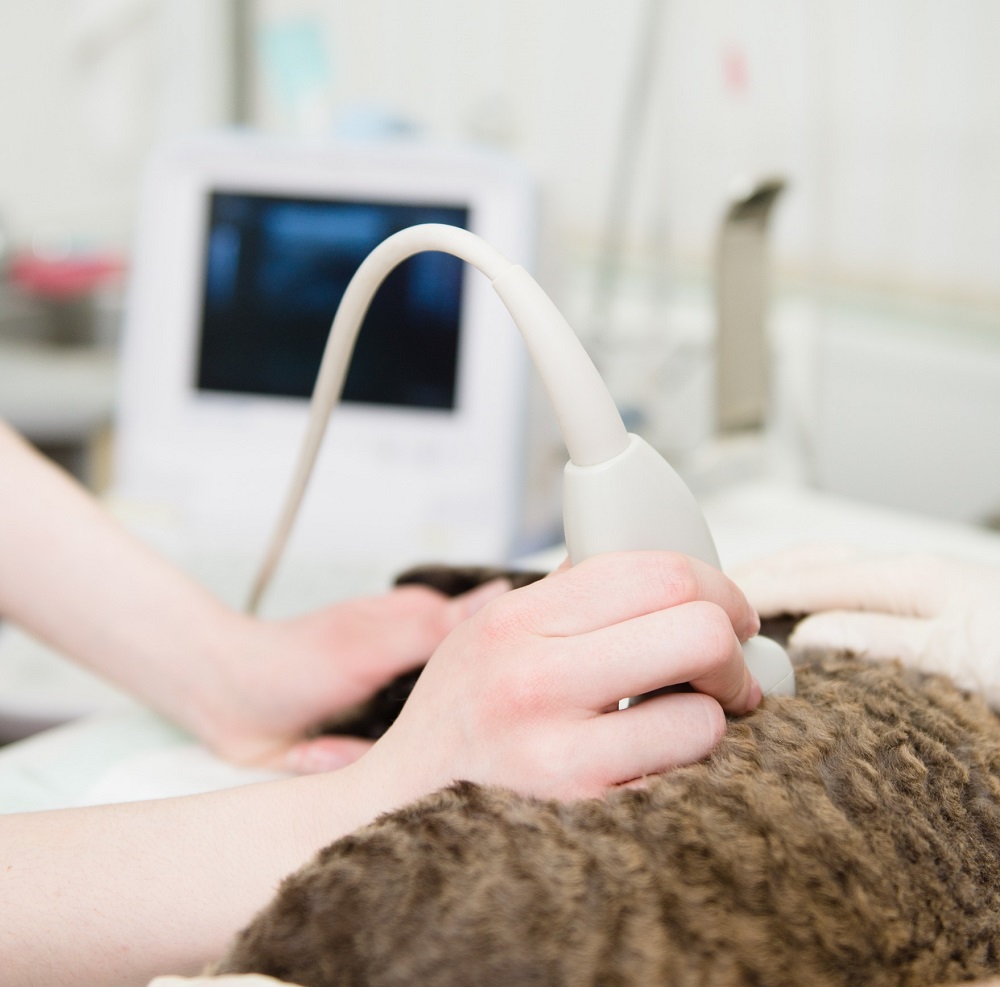
Abdominal Ultrasounds
Using high-frequency sound waves, ultrasound is used to create real-time images of your pet’s internal organs and systems. Ultrasounds are generally non-invasive, using a hand-held scanner or probe to image your pet’s body and ultrasound gel to improve contact and get a more detailed picture. Light sedation may be needed to help the pet relax, as ultrasounds do require the patient to remain still. Some conditions an ultrasound can help us diagnose and treat include:
- Tumors
- Cysts
- Bladder and kidney stones and other disorders
- Gastrointestinal/stomach/esophageal problems
- Liver and gallbladder issues
Ultrasounds can also be used to determine how many puppies or kittens a pregnant pet is carrying.
Request an Appointment
Echocardiograms
Dr. Morris became board certified in Emergency and Critical Care in 2014. She practiced as a staff criticalist until 2021. In 2016, she obtained intensive echocardiography training, and has been performing echocardiograms on hospitalized and emergency patients since then. In 2022 she decided to transition to mobile echocardiography.
Essentially an ultrasound of the heart, an echocardiogram helps us determine heart size, valve function, and heart strength. Echocardiograms are considered the best test for diagnosing heart disease in dogs and cats, showing us:
- Heart valve abnormalities
- Heart muscle thickening
- Heart dilation
- Heart tumors
- Congenital diseases
Dr. Morris became board certified in Emergency and Critical Care in 2014. She practiced as a staff criticalist until 2021. In 2016, she obtained intensive echocardiography training, and has been performing echocardiograms on hospitalized and emergency patients since then. In 2022 she decided to transition to mobile echocardiography. We are fortunate to have Dr. Morris visit our practice to lend her specialty services to help our patients!